The question
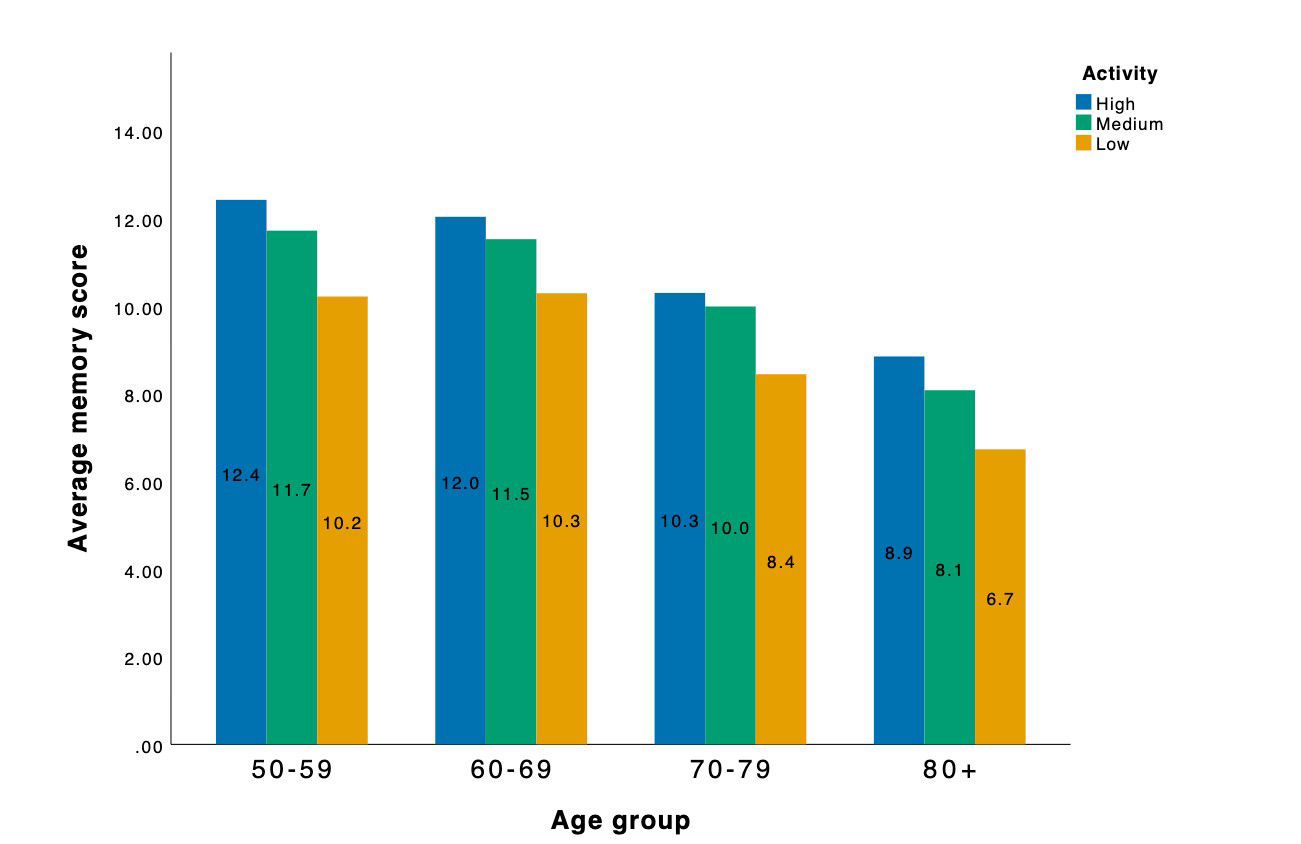
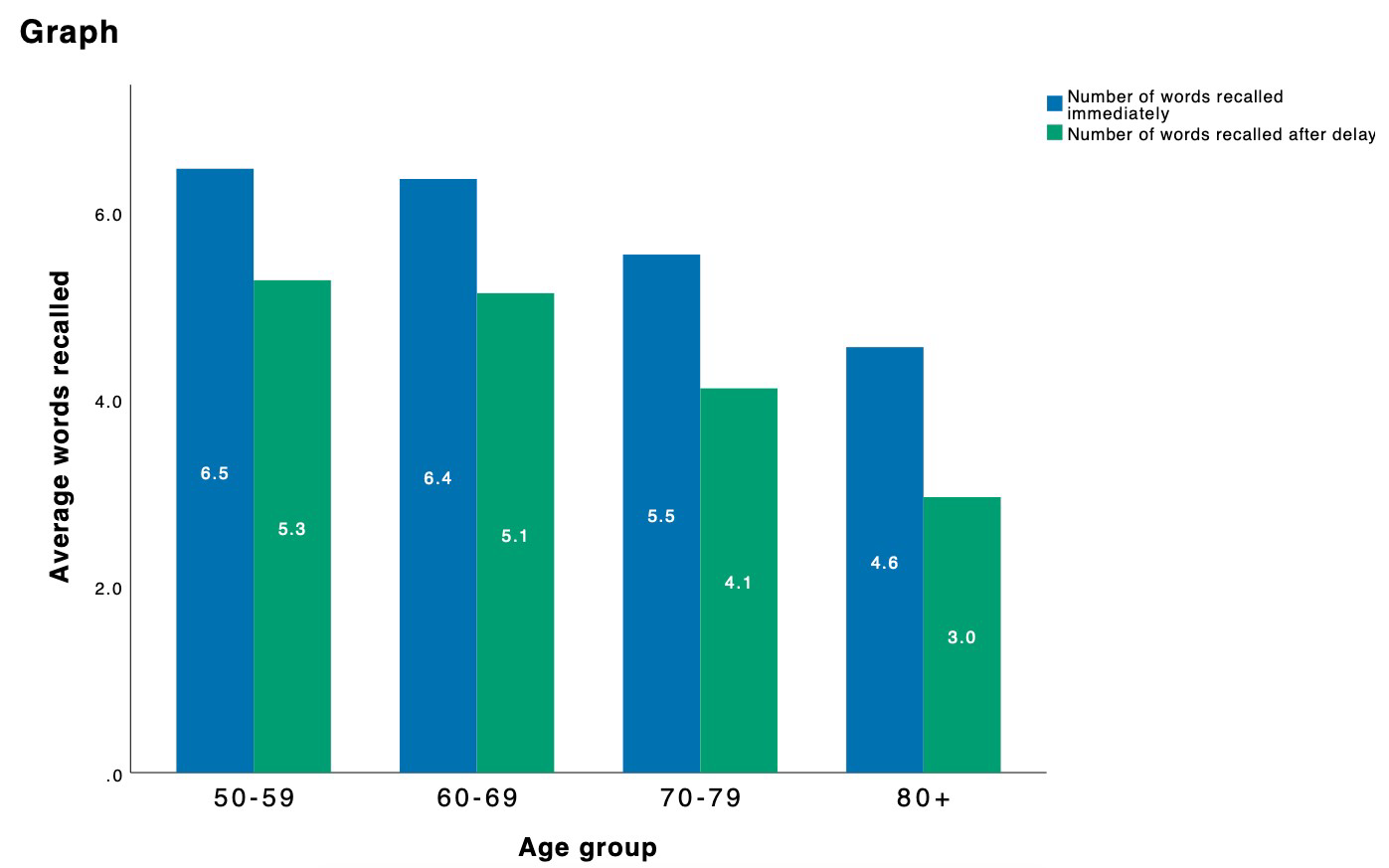
How much of the difference in memory between two people of the same age comes from things they can change, such as activity, mood and social life? ELSA measures memory directly, with a face-to-face word-recall test, rather than asking people to rate it.
Approach
- Memory = immediate + delayed recall of ten words (0 to 20). Scores were not normally distributed (Kolmogorov-Smirnov p < 0.001), so tests were non-parametric.
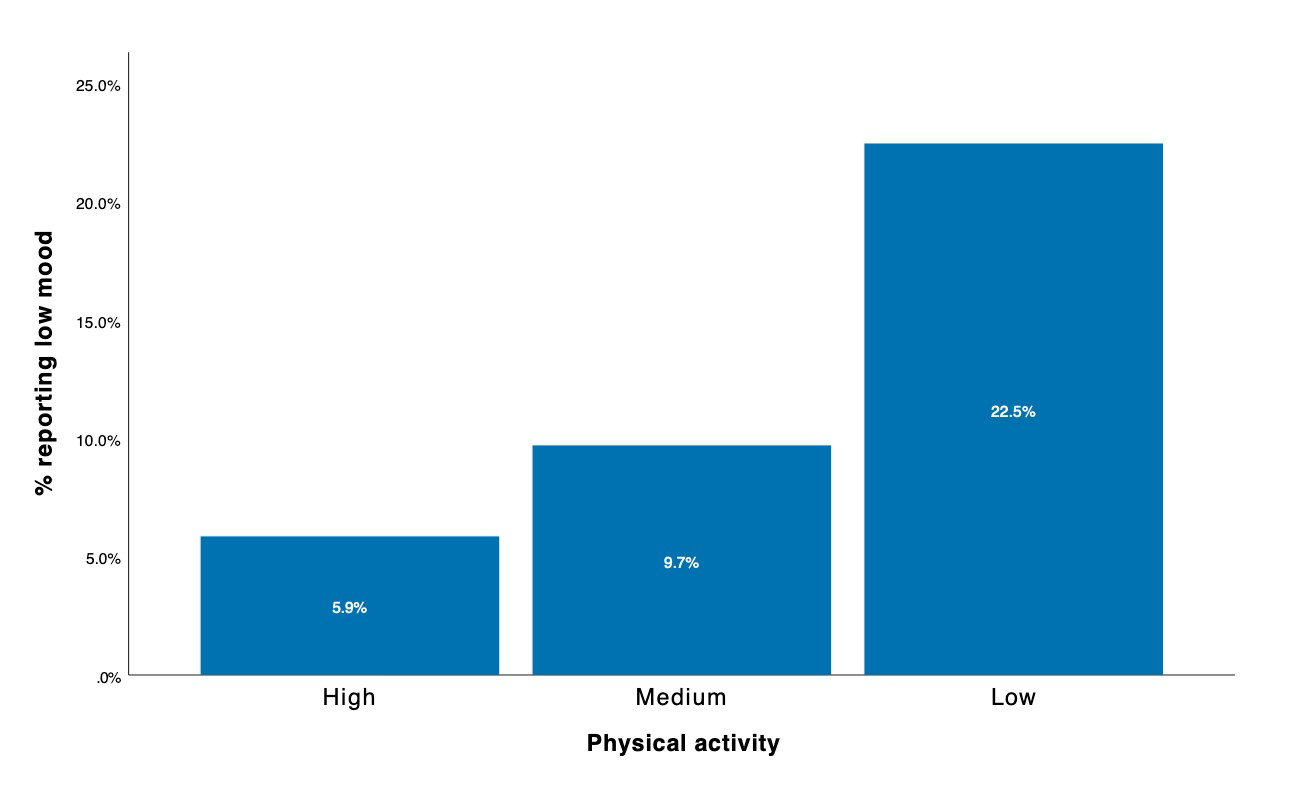
- Five tests, each with its own hypotheses: Mann-Whitney U (sex), Kruskal-Wallis (self-rated health), Spearman (age), chi-square with odds ratio (activity and low mood), then multiple regression with collinearity checks.
- Effect sizes translated into "years of ageing" (each coefficient ÷ the age coefficient), because with 9,000 people almost everything is significant.
Findings
≈ 7 yearsmemory difference linked to high physical activity
4.66×odds of low mood, least vs most active (95% CI 3.85 to 5.63)
21%of variation in memory explained by the seven factors
Limitations
- Cross-sectional: memory decline could reduce activity, not the other way round.
- Low mood is a single question; activity is frequency, not intensity.
- People aged 90+ have no exact age, so the age effect is likely understated.
- Next step: follow the same people across several ELSA waves.
All figures
Select a figure to enlarge it.